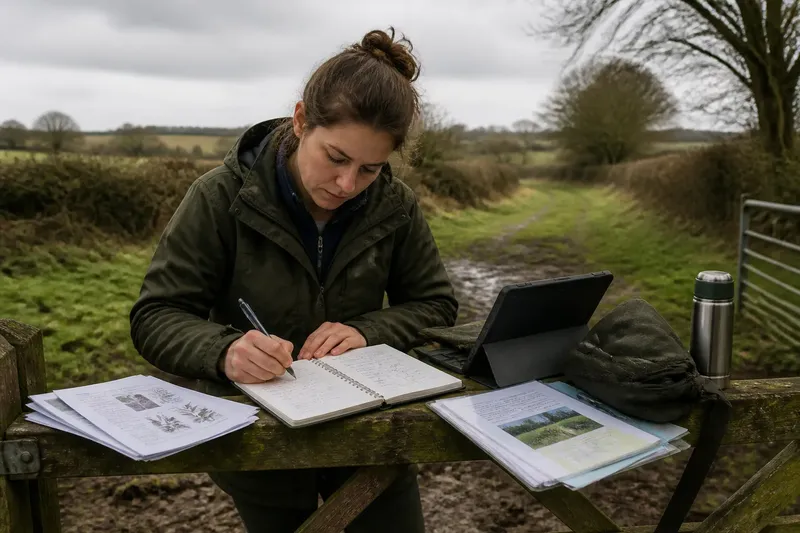
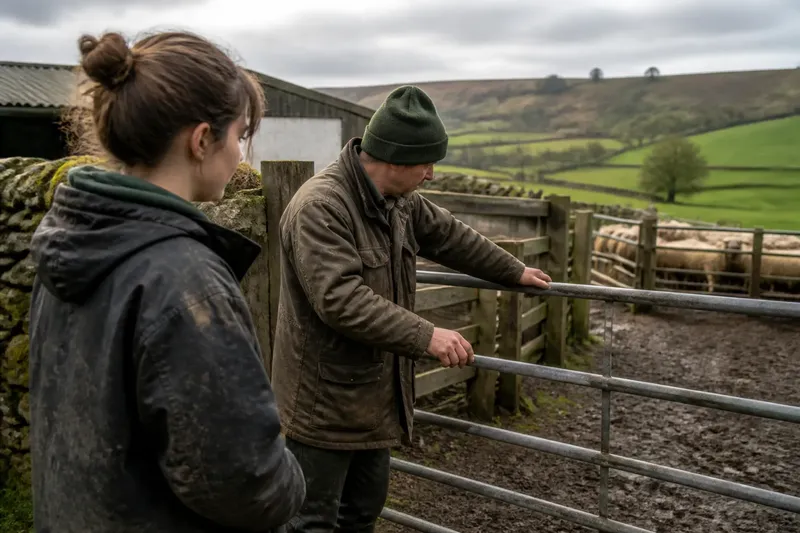
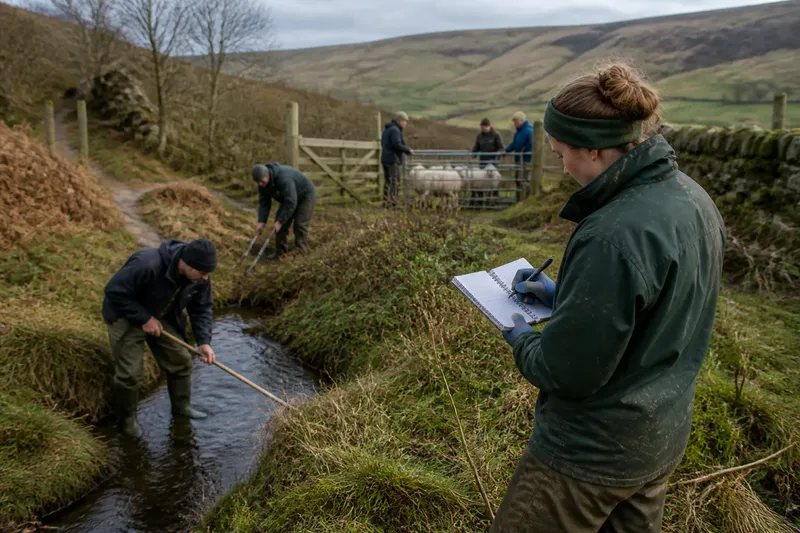
How to Tell Whether a Course Is Theory-Based, Practical, or Both
Learn how to tell whether a course is theory-based, practical, or both, and compare activities, outcomes, and learner roles before choosing land-based training.
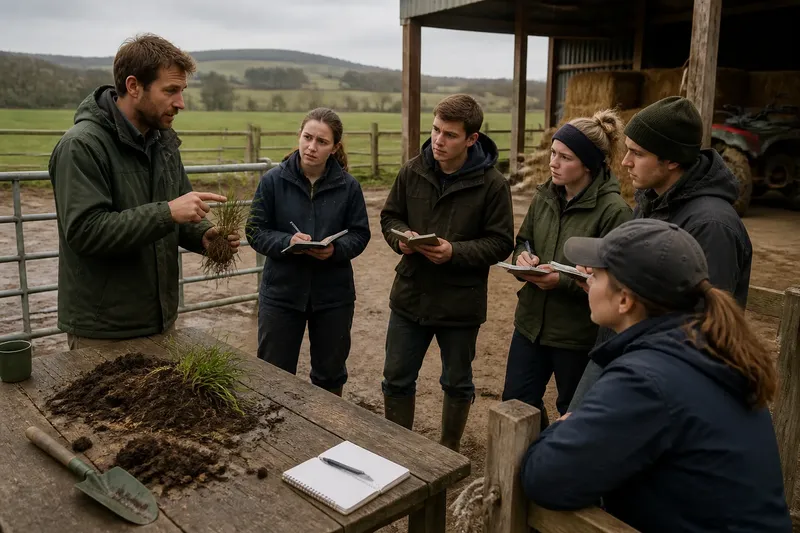
A livestock management listing can place animal welfare, feeding plans, and supervised handling in the same paragraph. To tell whether a course is theory-based, practical, or both, look past those subject names and ask what learners actually do with them. A list of topics describes content, not how learning happens.
Read the verbs, not just the subject names
Terms such as soil health, machinery, habitat management, and animal care identify content. Verbs reveal the teaching approach. “Understand,” “explain,” and “compare” often point toward classroom work such as reading, discussion, diagrams, calculations, or written assignments. “Inspect,” “record,” “operate,” and “carry out” suggest that learners apply ideas to a task, though the setting and level of responsibility still matter.
Practical-sounding language does not necessarily mean learners get hands-on time. “Explore tractor safety,” for instance, might mean a classroom presentation about hazards rather than time beside a tractor. Conversely, a theory session can include a useful activity, such as interpreting a field map or comparing feed labels. Treat the wording as a clue to investigate, not a verdict.
- Check for a named task: If the description says “identify weeds in a field,” ask how learners do it; if it only says “learn about weeds,” ask for a concrete activity or outcome.
- Check for a setting: If it names a workshop, farm, greenhouse, or classroom, ask what learners do there; if no setting is stated, ask where the activity takes place.
- Check the learner’s role: If learners carry out a supervised task, compare that with your goal; if they only watch a demonstration, ask whether they will have another chance to practice.
- Check the evidence of learning: If the course names a field record, practical assessment, written explanation, or discussion, compare it with the skill you want; if it gives no evidence, ask how learners show what they understand.
- Check the link to a real task: If a lesson connects a concept to an activity, note how that fits your aim; if the connection is unclear, ask how learners use the idea outside the classroom.
- Check what participation requires: If the provider specifies tools, clothing, or prior experience, decide whether you can meet those requirements; if the details are missing, ask what you must bring or know.
These clues help distinguish exposure from practice. Seeing a fencing demonstration can introduce a technique; building a short section under supervision asks the learner to coordinate tools, materials, and judgment. Both can be worthwhile, but they are not interchangeable.
Separate lesson format from learning outcome
“Classroom-based” and “practical” describe where or how teaching occurs. They do not, by themselves, say what a learner will be able to explain or do afterward. A theory lesson may build knowledge needed to make decisions in the field. A practical session may build familiarity with a task while leaving its underlying principles less clear.
For each advertised activity, ask what the course expects a learner to produce or explain. In a soil lesson, that might be an account of drainage factors, a sample description, or a recommendation linked to observations. A clear outcome connects the activity to something a learner can show, rather than leaving “hands-on” to carry the whole description.
Assessment language can help. A written assignment may assess whether learners can explain a process; a practical assessment may ask them to demonstrate a skill or interpret a situation. Some courses use both, because explaining a decision and carrying it out are different demands. Check the course outline for the stated assessment rather than inferring it from the title.
Look for a bridge between ideas and fieldwork
A useful mix is not simply a classroom component added to a practical one. The two parts should inform each other. A concept gives learners a reason to notice particular conditions; an observation gives them something concrete to question, record, or explain.
Say you are choosing a short pasture management course. Its description says learners discuss plant growth and then inspect a paddock, but does not say whether the sessions connect. You ask the provider whether learners use their observations to discuss grazing choices. If the answer is yes, the course makes that link explicit; if the sessions remain separate, you can decide whether the distinct activities still meet your goal.
Connections often appear in small details:
- A lesson introduces a concept, then a field activity asks learners to notice evidence of it.
- Learners record observations and use them in a later discussion or assignment.
- An instructor explains why a task is done a particular way, not only which motions to copy.
- A practical task is followed by reflection on what changed when conditions differed from the example.
Weather, ground conditions, animal behavior, and available equipment can alter a task. A course that invites learners to explain adjustments can connect practical judgment to classroom concepts without treating one routine as suitable for every site.
Clarify what practical participation involves
Practical learning can involve several levels of participation. Learners may watch a demonstration, handle materials, complete a task in pairs, or carry out a supervised activity. Each has a place, but a course description should make the learner’s role clear. “Practical sessions included” is less informative than a named activity and an account of how learners take part.
Ask about conditions that affect participation. Does the provider supply tools, protective clothing, or materials? Are learners expected to bring boots or work gloves? Is the activity suitable for beginners, or does it assume prior experience? For equipment or tasks with safety requirements, follow the provider’s instructions and relevant manufacturer guidance; seek qualified instruction where the work calls for it.
Also check whether the advertised setting is planned and what could change it. A farm visit, workshop, or outdoor session may depend on the schedule and conditions. The provider can clarify what is planned and what alternative teaching may be used if an activity cannot proceed as described.
Questions that clarify the theory and practical balance?
Does “hands-on” mean every learner performs the task?
Not necessarily. It may describe demonstrations, shared equipment, or small-group work, so ask what each learner is expected to do. The answer helps distinguish watching from practicing.
Can a classroom-heavy course still suit a practical goal?
It can, if the course teaches concepts you need to interpret situations or prepare for later training. Check whether its stated outcomes relate to your intended tasks rather than ruling it out based on format alone.
How can I tell whether fieldwork supports the lessons?
Look for a stated link: learners apply a concept outdoors, record observations, or discuss what those observations mean. If the description names field sessions but no follow-up, ask how they connect to the rest of the course.
What should I ask about experience requirements?
Ask whether beginners can participate and whether any tasks assume prior knowledge, equipment familiarity, or physical preparation. A clear answer lets you compare the course with your current skills instead of guessing from promotional wording.
Match the balance to the decision you need to make
Course choice depends on what you want the learning to help you do. If you need vocabulary and a grasp of underlying processes, theory may be a useful starting point. If you need guided experience with a task, look for practical participation and clear supervision. If you need both, favor descriptions that connect explanations, observations, and practice.
Do not treat the balance as a score where more field time automatically means a better course. A short, well-explained demonstration may answer a beginner’s immediate question; a substantial practical task may be less useful if learners cannot connect it to the conditions they encounter. Read for the sequence, the learner’s role, and the evidence of learning.
Before enrolling, write down the task or decision you want to handle better, then compare it with the course outcomes and activities. If the description leaves a gap, ask the provider one precise question about it. For choosing a theory-based, practical, or mixed course, that answer is often more useful than trying to decode “practical” as if it were a complete curriculum.